DSWD chief assures maximized social protection investments for 2027
Department of Social Welfare and Development (DSWD) Secretary Rex Gatchalian assured the Department of Budget and Management (DBM) that the DSWD will maximize the Philippine government’s investments in social protection by strengthening human capital development, improving programs to address socio-economic shocks, and ensuring that government assistance reaches the most vulnerable Filipinos.
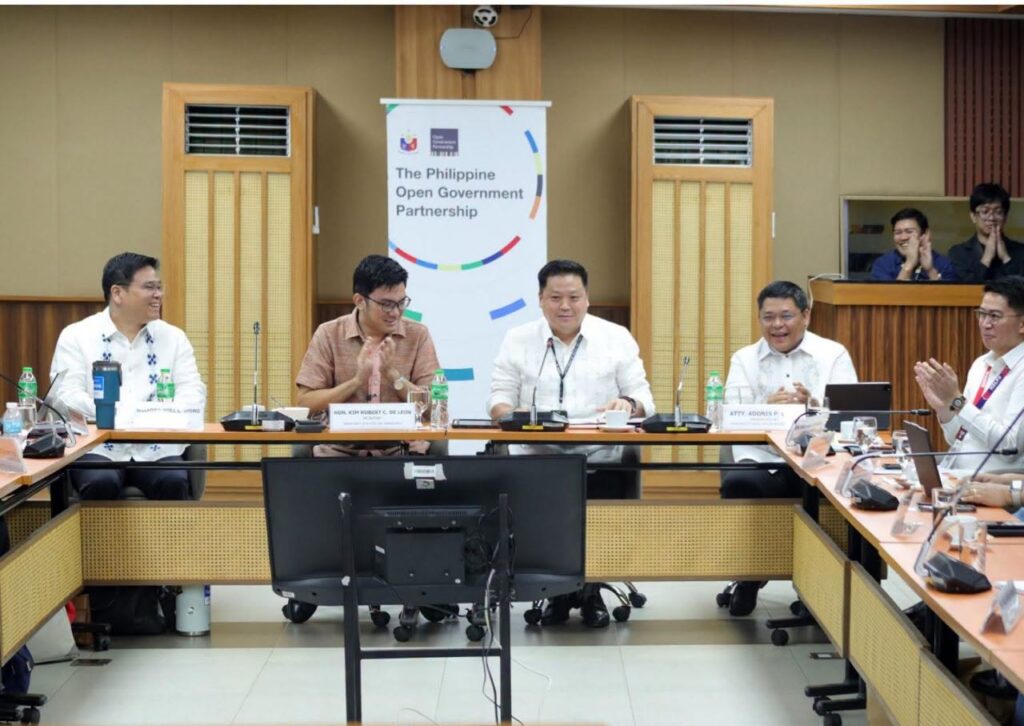
“Social welfare is our first name but for the past four years, the President (Ferdinand R. Marcos Jr.) has been wanting us to focus a lot on social development. Yung social development is about empowerment, and community activism, and community involvement,” the DSWD chief said on Wednesday (October 28) during his presentation at the Social Protection Reforms Dialogue, organized by the DBM under the Philippine Open Government Partnership (PH-OGP).
According to Secretary Gatchalian, the DSWD’s proposed 2027 investments in social protection build on nearly two decades of increasing government allocations for programs intended to reduce poverty, address hunger, and improve the well-being of Filipino families.
“The period 2009 to 2024 saw the proliferation of new social protection programs and enhancements of old programs. These were accompanied by increases in budget allocations for social protection and in the number of social protection beneficiaries,” the DSWD chief pointed out.
In 2027, the DSWD budget will reinforce programs aimed at maximizing the efficiency, responsiveness, and long-term impact of social protection programs.
“For 2027, the DSWD proposes a total of Php223.3 billion in social protection investments reflecting the very essence of our mandate. This includes Php197.3 billion dedicated to human capital development through core social safety nets – 4Ps (Pantawid Pamilyang Pilipino Program), Assistance to Individuals in Crisis Situation (AICS), the Social Pension for Indigent Senior Citizens, Walang Gutom Program, Tara, Basa! Program, and the services for residential care facilities,” Secretary Gatchalian said.
To ensure that social protection investments will be fully maximized, the DSWD chief underscored the significance of sustained partnerships under an open-government approach in three key areas.
First, the DSWD is encouraging partners to help co-design policy guidelines, mobilize crisis financing, and share good practices in strengthening early warning systems to ensure that resources are available before disasters strike.
Second, Secretary Gatchalian noted the need for stronger collaboration in addressing data gaps through joint research, predictive risk modeling, and rapid assessments.
For the third key area, the DSWD chief wants to expand community-based outreach, particularly in geographically isolated and disadvantaged areas (GIDAs) and last-mile communities.
This includes strengthening the delivery of psychosocial support and child protection services, as well as establishing independent feedback mechanisms to help ensure that assistance reaches intended beneficiaries and that their concerns are addressed.
DBM Acting Secretary Kim Robert De Leon, who serves as the chairperson of the PH-OGP, agreed with the DSWD chief on the significance of working with stakeholders to gain a stronger, more responsive, and more inclusive social protection system.
“Open government partnership in the Philippines started really as transparency in the budget process, engaging CSOs in the budget process, but now we are transcending into opening up the space for civil society to be part of the determination of policy, not necessarily fiscal policy alone,” Secretary De Leon said in his message.
“The strength of our social protection systems should not be measured by how many programs we have but how few vulnerable Filipinos we leave behind. At the DBM, we recognize that funding is only a part of the equation,” the DBM chief added. (AKDL)